When a customer, client, or commercial debtor files for bankruptcy, it halts traditional debt recovery in its tracks. For business owners, credit managers, and CFOs, receiving a notice of bankruptcy can feel like an immediate financial loss. However, understanding the legal framework surrounding bankruptcy allows creditors to navigate court proceedings safely, protect their rights, and maximize financial recovery while avoiding costly statutory penalties.
⭐️ Trusted Leader in Compliant Debt Recovery
Backed by a 4.8-star Google rating across 2,000+ verified client reviews, nationwide 50-state licensing, SOC 2 Type II data security, and strict FDCPA/HIPAA compliance, CA-USA provides risk-free, legal-first debt recovery and automated bankruptcy scrubbing for businesses across all 50 states.
Quick Answer: How Does Bankruptcy Affect Debt Collection?
When a debtor files for bankruptcy, an Automatic Stay (11 U.S.C. § 362) takes effect immediately, legally prohibiting creditors and collection agencies from making calls, sending billing statements, or pursuing legal action. To recover funds legally, creditors must halt direct outreach, verify the filing via PACER scrubbing, and submit an official Proof of Claim (Form 410) before the court deadline.
The Automatic Stay: Understanding the Legal Line
The most critical element of bankruptcy law for creditors is the Automatic Stay under Section 362 of the U.S. Bankruptcy Code. The moment a debtor files a bankruptcy petition with the federal court, an injunction automatically goes into effect.
What Is Strictly Prohibited Under the Automatic Stay?
-
Initiating or continuing telephone calls, letters, emails, or digital collection notices.
-
Filing new lawsuits, repossessing collateral, or enforcing existing judgments.
-
Placing liens on property or garnishing wages.
-
Threatening legal action or attempting to coerce payment on pre-petition debts.
⚠️ Critical Legal Warning: Violating the Automatic Stay—even accidentally—can result in severe federal bankruptcy court sanctions, monetary fines, punitive damages, and mandatory payment of the debtor’s attorney fees under 11 U.S.C. § 362(k).
Comparing Bankruptcy Chapters: Impact on Creditor Recovery
How bankruptcy affects your outstanding account depends heavily on the specific bankruptcy chapter filed by the debtor:
| Bankruptcy Chapter | Target Entity | Impact on Collection Efforts | Creditor Recovery Pathway |
| Chapter 7(Liquidation) | Individuals & Businesses | Immediate freeze; non-exempt assets liquidated by trustee | File Proof of Claim for trustee asset distribution |
| Chapter 11(Reorganization) | Corporations, LLCs, & High-Debt Individuals | Freeze on pre-petition debt; business operates under court supervision | Claim administrative priority; negotiate plan of reorganization |
| Chapter 13(Wage Earner Plan) | Individuals & Sole Proprietors | Freeze on pre-petition debt; 3 to 5-year repayment plan | Receive structured monthly court-mandated plan disbursements |
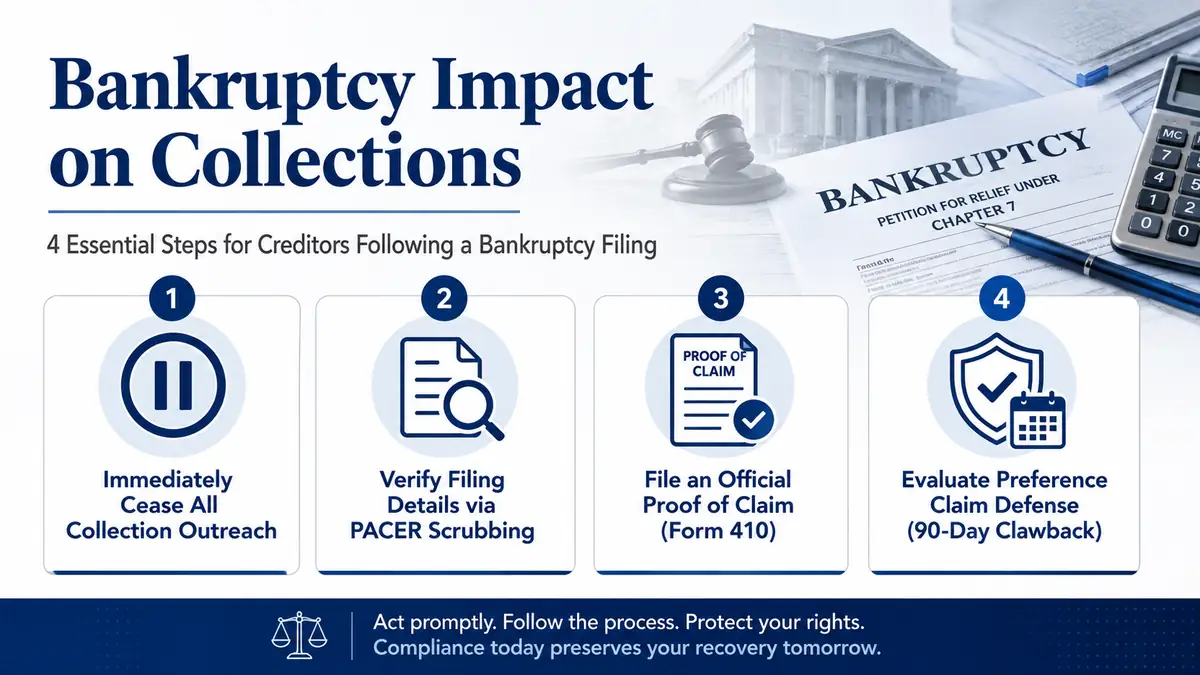
4 Essential Steps for Creditors Following a Bankruptcy Filing
When notified that a debtor has filed for bankruptcy, CA-USA recommends executing this structured 4-step compliance protocol:
1. Immediately Cease All Collection Outreach
Flag the account in your billing or ERP system to stop automated statements, phone calls, and collection notices. If the account is placed with a collection agency, notify them immediately so outreach is paused.
2. Verify Filing Details via PACER Scrubbing
Obtain the official Bankruptcy Case Number, filing date, court jurisdiction, and assigned Trustee. Professional agencies like CA-USA utilize automated PACER (Public Access to Court Electronic Records) integration to verify active bankruptcy filings instantly and prevent unlawful contact.
3. File an Official Proof of Claim (Form 410)
To participate in any asset distribution or court repayment plan, creditors must file an Official Form 410 (Proof of Claim) with the bankruptcy court clerk before the court-ordered Bar Date. The filing must include itemized invoices, contracts, signed delivery receipts, or personal guarantees supporting the debt.
4. Evaluate Preference Claim Defense (90-Day Clawback)
In commercial Chapter 7 and Chapter 11 cases, a bankruptcy trustee may attempt to recover payments made by the debtor to your business in the 90 days prior to their filing (known as Preference Claims under 11 U.S.C. § 547). Working with an experienced collection partner ensures you can assert legal defenses such as the Ordinary Course of Business or Subsequent New Value defenses to protect past payments.
How CA-USA Protects Your Business During Debtor Insolvency
-
Automated PACER Scrubbing: We continuously cross-reference accounts against national federal bankruptcy databases to halt outreach instantly upon petition filing.
-
Proof of Claim Administration: Assistance with compiling, documenting, and filing timely Proof of Claim documentation with federal bankruptcy courts.
-
Preference Claim Defense Support: Specialized guidance to help commercial creditors defend against trustee payment clawback demands.
-
Co-Signer & Third-Party Recovery: Identifying non-filing co-debtors, guarantors, or corporate officers who remain personally liable for the debt outside of bankruptcy.
Frequently Asked Questions
What happens if a collection agency violates the bankruptcy automatic stay?
Violating the automatic stay can result in federal court sanctions, statutory fines, and mandatory payment of the debtor’s legal fees under 11 U.S.C. § 362(k).
Can you collect from a co-signer if the primary debtor files bankruptcy?
In Chapter 7 and Chapter 11, creditors can generally pursue non-filing personal guarantors or co-signers. However, Chapter 13 triggers a “co-debtor stay” that protects consumer co-signers during the court repayment plan.
What is a Proof of Claim in bankruptcy debt collection?
A Proof of Claim (Form 410) is a formal legal document submitted to the bankruptcy court documenting the exact debt owed, securing your right to receive funds during asset distribution.
What is the difference between pre-petition and post-petition debt?
Pre-petition debt refers to obligations incurred before the bankruptcy filing date (subject to the automatic stay and court discharge). Post-petition debt occurs after the filing date and is generally not covered by the automatic stay.