Managing patient care begins at the front desk, but sustaining a private practice, clinic, or medical group depends on maintaining healthy cash flow and controlling Accounts Receivable (AR). A skilled Medical Office Administrator does far more than schedule appointments and manage staff—they oversee patient billing workflows, audit aging balances, and determine when to partner with a specialized, HIPAA-compliant medical collection agency to recover past-due revenue safely.
Quick Answer: What is a Medical Office Administrator’s Role in AR Management?
A Medical Office Administrator is responsible for overseeing medical practice operations, optimizing patient billing workflows, and keeping Accounts Receivable (AR) within healthy benchmarks (ideally under 40 days). Their financial duties include verifying insurance coverage, collecting patient copays upfront, auditing 60/90+ day past-due accounts, and transitioning uncollectible balances to a specialized, HIPAA-compliant medical collection agency.

The Hidden Financial Duty: Protecting Practice Cash Flow
While clinical providers focus on patient care, the Medical Office Administrator serves as the primary steward of practice profitability. Uncollected patient balances, unpaid deductibles, and denied insurance claims directly threaten an independent practice’s operating margin.
Effective administrators monitor two core performance metrics:
-
Days in Accounts Receivable (Days in AR): The average number of days it takes for a practice to convert billed services into cash. (Healthy benchmark: 30 to 40 days).
-
Net Collection Rate: The percentage of allowable revenue collected relative to contracted rates. (Healthy benchmark: 95% or higher).
When patient balances pass the 60- and 90-day mark, the likelihood of self-recovery drops significantly. A proactive administrator implements structured billing controls early in the patient lifecycle to prevent bad debt write-offs.
The 90-Day Patient AR Escalation Timeline
To keep practice receivables healthy without overwhelming billing staff, Medical Office Administrators rely on a standardized 90-day recovery workflow:
| Timeline | Administrator Action | Revenue Goal |
| Day 1 (Check-In) | Verify insurance coverage, collect copays, and secure a signed Financial Policy Agreement. | Eliminate front-end registration errors and secure initial self-pay obligations. |
| Days 1–30 | Submit clean insurance claims and issue the initial patient statement post-EOB adjudication. | Prompt rapid self-pay balance resolution. |
| Days 31–60 | Issue a polite follow-up billing statement and offer flexible, interest-free payment plans. | Engage patients early before debts age into default. |
| Days 61–90 | Send a final internal notice under practice letterhead outlining clear payment deadlines (Soft Pre-Collect). | Motivate direct settlement while maintaining patient goodwill. |
| Day 90+ | Transfer delinquent balance to a specialized HIPAA-compliant medical collection agency. | Professional recovery without burning out clinical or administrative staff. |
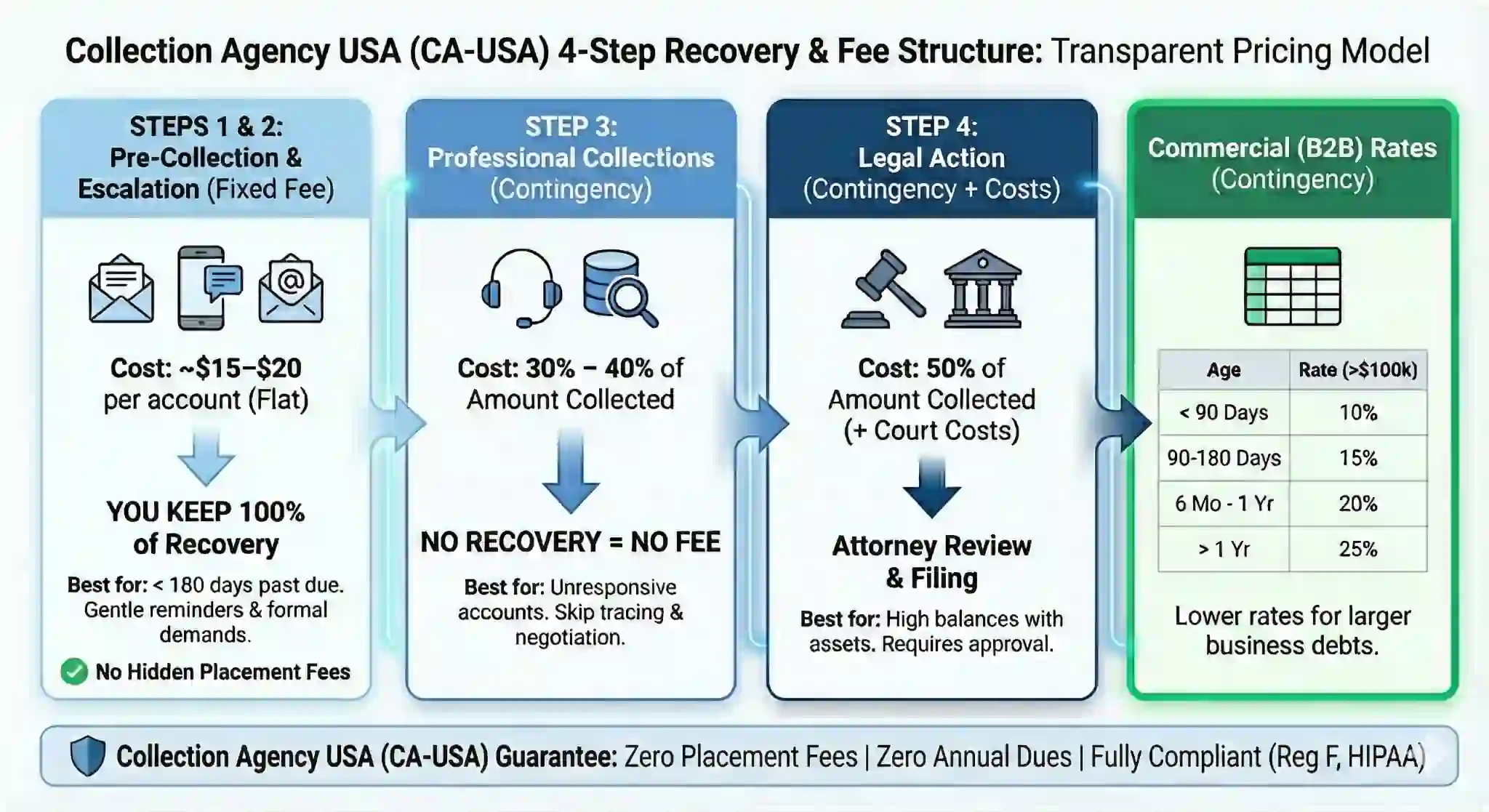
When Should a Medical Administrator Hire a Collection Agency?
A common mistake made by inexperienced medical administrators is keeping delinquent self-pay accounts in-house for 180 days or longer. Pursuing aged patient balances internally creates significant operational friction:
-
Staff Burnout: Administrative staff hired for scheduling and patient intake are rarely trained in formal debt collection regulations or negotiation.
-
Strained Patient Relationships: Front-desk staff making uncomfortable collection calls can damage patient trust and lead to negative online reviews or practice departures.
-
Diminishing Returns: The financial cost of staff time, postage, and follow-up statements quickly exceeds the value of the uncollected debt.
By establishing an automated 90-day collection trigger, administrators ensure that delinquent accounts receive specialized recovery attention while internal staff remain focused on daily operations and patient experience.
4 HIPAA & Compliance Pillars Administrators Must Verify
When selecting a debt recovery partner, the Medical Office Administrator must ensure the agency adheres to strict healthcare privacy laws and financial regulations. Partnering with a non-compliant agency creates severe legal exposure for the practice.
Administrators should audit agencies for the following four standards:
-
Business Associate Agreement (BAA): A legally binding BAA must be executed prior to sharing any Protected Health Information (PHI). The agency must handle data strictly under HIPAA guidelines.
-
FDCPA & Regulation F Compliance: The agency must comply with the Fair Debt Collection Practices Act (FDCPA), including strict limits on call frequency, digital messaging rules, and required debt validation notices.
-
EOB & CPT Code Accuracy: The recovery team must understand Explanation of Benefits (EOB) statements, CPT/CDT coding, and insurance adjustments to ensure patients are never pursued for balances actually owed by insurance carriers.
-
Patient-First Diplomacy: Medical debt requires a compassionate, brand-safe approach. The agency must act as a diplomatic extension of the practice, offering structured payment arrangements without aggressive or harassing behavior.
Frequently Asked Questions
When should a medical office administrator send a patient account to collections?
Most medical practices transfer delinquent self-pay accounts to a collection agency between 90 and 120 days past due, after internal statements, payment plan offers, and final notices go unanswered.
How do medical office administrators ensure collection agencies are HIPAA compliant?
Administrators verify HIPAA compliance by executing a formal Business Associate Agreement (BAA), verifying SOC-audited data security measures, and ensuring the agency accesses only the minimum necessary patient information required for financial recovery.
How does outsourcing 90+ day AR help reduce medical office staff workload?
Outsourcing aged AR eliminates the time-consuming process of making manual billing calls, tracking down updated addresses, and managing disputed claims. This allows internal staff to focus on scheduling, check-in, and immediate insurance verification.
What is the difference between a medical billing service and a medical collection agency?
A medical billing service manages primary claim generation, coding, insurance submission, and initial patient billing. A medical collection agency specializes strictly in recovering severely aged (90+ day), disputed, or defaulted self-pay balances that internal billing efforts failed to resolve.