Facing a past-due bill or accumulated debt can feel overwhelming, but most creditors, healthcare providers, and collection agencies prefer a structured payment plan over defaulting entirely. Negotiating a manageable installment arrangement allows you to clear outstanding balances, protect your credit score, and avoid aggressive collection actions or legal litigation.
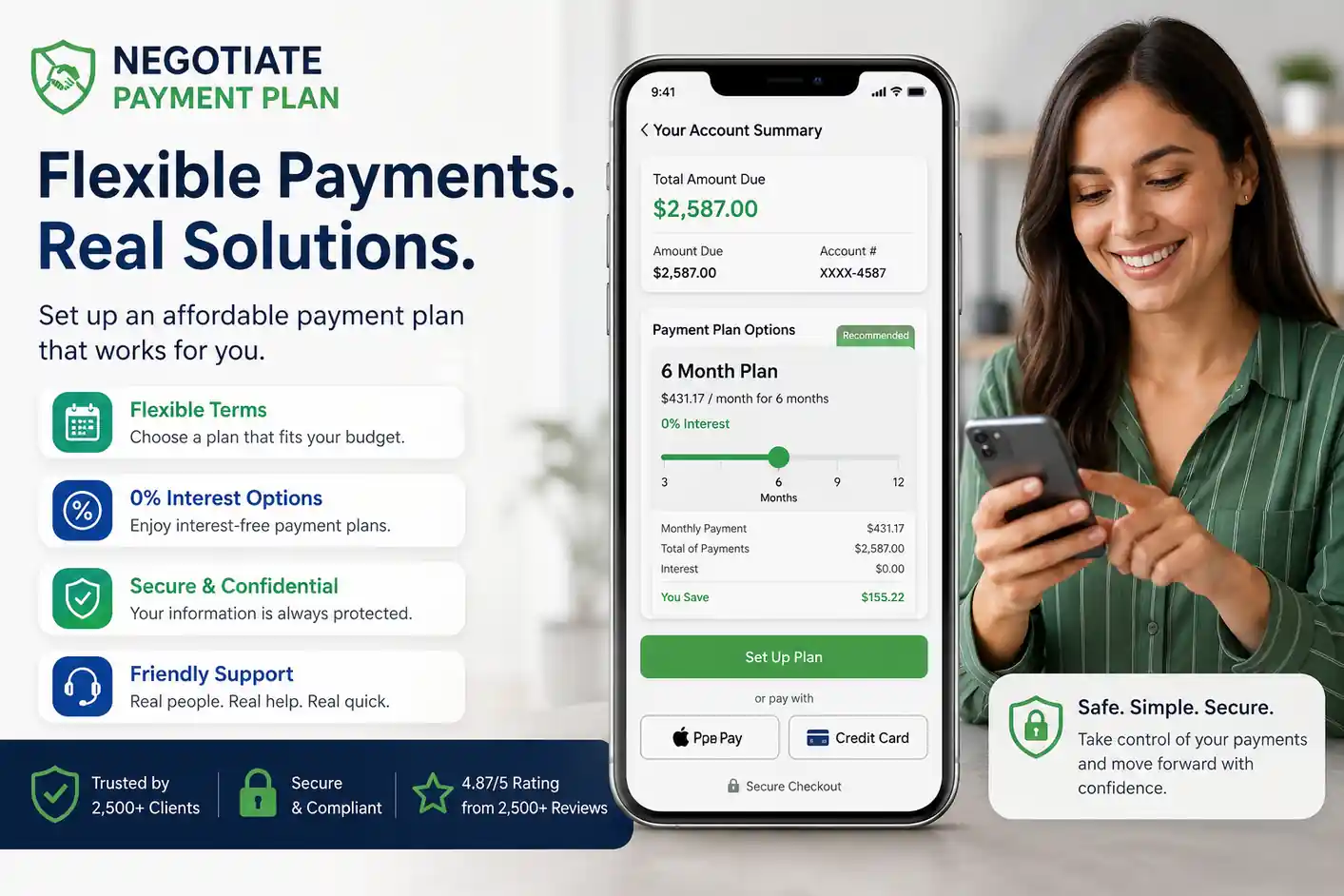
This guide provides step-by-step strategies, phone negotiation scripts, hardship letter templates, and legal protections to help you successfully negotiate a payment plan with any creditor.
Quick Answer: How Do You Negotiate a Payment Plan with a Creditor?To negotiate a payment plan: calculate your true disposable monthly income, contact the creditor before the account reaches 90 days past due, request a zero-interest hardship arrangement or principal reduction, and insist on receiving a signed written agreement outlining payment dates and fee waivers before making your first payment. |
Payment Plan Negotiation Strategy Matrix by Debt Type
Different types of debt carry different legal rules and negotiation levers. Use this matrix to tailor your approach:
| Debt Category | Primary Negotiation Lever | Target Outcome | Key Risk to Avoid |
| Medical & Hospital Bills | Hospital Charity Care (501(r) policies), CFPB 365-day credit reporting grace period. | 0% interest monthly installment plan, income-based debt reduction, or financial assistance approval. | Paying via credit card (which converts low-interest medical debt into high-interest consumer debt). |
| Credit Cards & Personal Loans | Internal Hardship Programs, APR reduction, fee waivers. | Fixed 12–36 month repayment plan with reduced interest (0–5%) and closed account status. | Agreeing to a monthly payment higher than your verified budget can sustain. |
| B2B Trade Credit & Vendor Invoices | Preserving ongoing business operations, net-30 to net-90 term extensions, supplier relationship value. | Restructured payment schedule tied to future receivables or inventory turnover. | Resetting personal guarantee liabilities without securing formal lien releases. |
| Aged Debt / Collection Agencies | Lump-sum settlement discount, pay-for-delete agreements, statutory age of debt. | Discounted lump-sum payoff (30–50% of balance) or structured zero-interest monthly plan. | Making a partial payment before receiving written confirmation, which can reset the legal statute of limitations. |
Step-by-Step Guide: How to Negotiate Your Payment Plan
Step 1: Calculate Your Baseline Budget
Before calling a creditor, calculate exactly how much you can afford to pay each month without defaulting on essential living expenses (housing, utilities, food). Never offer a figure based on optimism; offer a figure grounded in your actual budget.
Step 2: Request the Internal Hardship Department
When calling, ask to speak directly with the Hardship Department, Financial Counseling Office, or Loss Mitigation Specialist. Standard customer service representatives rarely have the authority to waive interest or adjust contract terms.
Step 3: Use the “3-Point Negotiation Formula”
-
State the Problem: Explain the temporary financial hardship (job loss, medical emergency, reduced income).
-
Propose the Solution: State the specific monthly amount you can afford and your preferred payment date.
-
Request Terms Waiver: Ask for a temporary freeze on interest, late fees, and negative credit reporting while on the plan.
Step 4: Secure Everything in Writing
Never make a payment until you receive a formal written agreement or email confirmation from the creditor detailing:
-
Agreed monthly payment amount and due date.
-
Total number of payments required.
-
Confirmation that interest/late fees are frozen.
-
Agreement on credit bureau reporting status (e.g., “Paid as Agreed” or “Current”).
Copy-Paste Phone Negotiation Script
You: “Hello, I am calling regarding account number [ACCOUNT NUMBER]. I am currently experiencing a temporary financial hardship due to [JOB LOSS / MEDICAL EMERGENCY / INCOME REDUCTION], and I am unable to make the full minimum payment of [AMOUNT].
However, I am committed to resolving this balance in full. Based on my current financial review, I can commit to a fixed payment of $[AMOUNT] per month starting on [DATE].
In exchange for committing to this plan, I request that you temporarily freeze monthly interest charges, waive past late fees, and keep my account in good standing with credit bureaus. Can you confirm if your financial hardship department can approve these terms?”
Formal Financial Hardship Request Letter Template
[Your Full Name]
[Your Street Address]
[City, State, ZIP Code]
[Your Phone Number] / [Your Email Address]

[Date]

[Creditor / Billing Department Name]
[Creditor Street Address]
[City, State, ZIP Code]

RE: Formal Hardship Request & Payment Plan Proposal
Account Number: [INSERT ACCOUNT NUMBER]
Current Balance: $[INSERT TOTAL BALANCE]

Dear Financial Services / Billing Department,

I am writing to formally request a temporary financial hardship payment arrangement for the above-referenced account. Due to [REASON: unexpected medical expenses / job loss / reduced working hours], my current household income has been significantly impacted, making it impossible to maintain standard monthly payments.

I am fully committed to fulfilling my financial obligation. Based on a realistic assessment of my necessary living expenses, I am proposing the following payment schedule:

1. Monthly Installment Amount: $[PROPOSED MONTHLY AMOUNT]
2. Payment Frequency: Monthly, beginning on [START DATE]
3. Total Duration: [NUMBER OF MONTHS] or until the balance is fully satisfied.

In light of this good-faith effort, I respectfully request that [CREDITOR NAME] agree to:
- Freeze ongoing interest accumulation and monthly late fees.
- Pause any escalation to third-party collection agencies or legal action.
- Report this account as 'Current under agreed hardship plan' to credit reporting agencies.

Please review this proposal and send written confirmation of acceptance to my address or email above. Upon receipt of written confirmation, I will immediately issue my first scheduled payment.

Thank you for your time, understanding, and assistance in resolving this matter.

Sincerely,

[Your Signature]

[Your Printed Name]
Frequently Asked Questions
Will negotiating a payment plan hurt my credit score?
Enrolling in an internal hardship payment plan directly with an original creditor is far better for your credit score than defaulting or going to collections. While some creditors may temporarily close a credit card account during a hardship program, completing the plan avoids severe credit damage from late marks or collections.
What should I do if a creditor rejects my proposed payment plan?
If a creditor rejects your initial offer, ask for an escalation to a supervisor, request a temporary 30-to-60-day payment pause (forbearance), or offer a slightly adjusted bi-weekly payment schedule that fits your cash flow.
Can a collection agency cancel a payment plan if I miss one payment?
Yes. Most payment plan agreements include a default clause stating that missing a scheduled payment voids the agreement and restores the full balance, including accrued fees. If you foresee missing a payment, contact the creditor before the due date to request a temporary extension.