The transport and logistics industry operates on tight margins, volatile cash flows, and complex multi-party agreements. When freight brokers, motor carriers, 3PLs, or shippers default on invoices, traditional debt collection methods often fall short. Successfully recovering freight debt requires deep expertise in interstate commerce laws, federal transportation statutes, and specialized industry mechanisms like freight liens and broker bond claims.
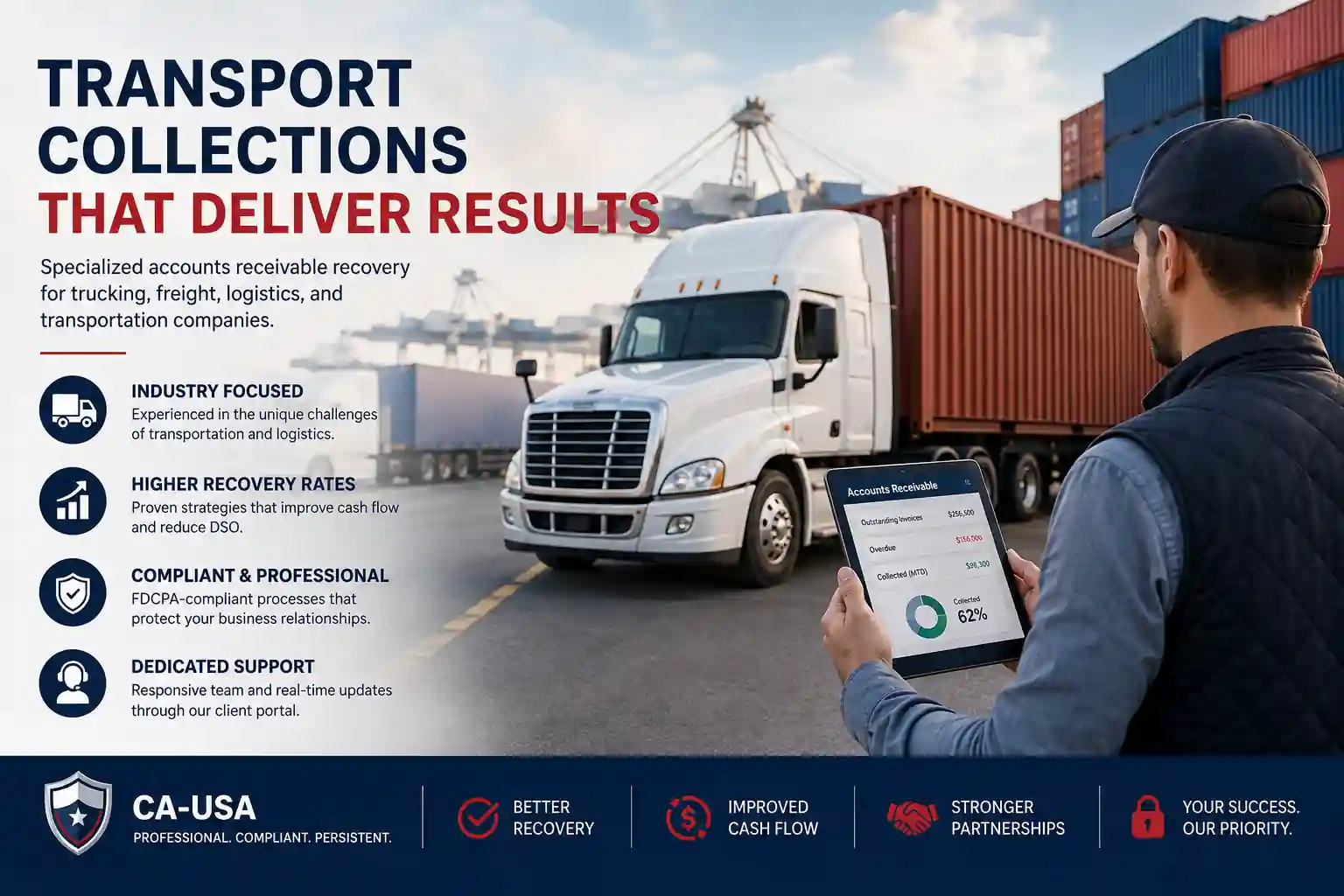
Without specialized legal intervention, unresolved transport debts quickly erode profitability—especially given strict federal statutes of limitations that limit the time frame for enforcing recovery.
⭐️ Trusted Leader in Freight & Transport Debt Recovery
Backed by a 4.8-star Google rating across 2,000+ verified client reviews, nationwide 50-state licensing, SOC 2 Type II data security, and strict FDCPA/FCRA compliance, CA-USA provides risk-free, diplomatic B2B debt collection, broker bond recovery, and logistics judgment enforcement across all 50 states.
Quick Answer: How Does Freight & Transport Debt Collection Work?
Freight debt recovery is governed by federal statutes rather than basic consumer contract law. Motor carriers generally have 18 months to file a civil action to recover unpaid transportation charges under 49 U.S.C. § 14705(a). Key recovery mechanisms include enforcing Possessory Freight Liens (UCC § 7-307), filing claims against BMC-84 Surety Bonds / BMC-85 Trust Funds, and establishing joint liability across shippers and consignees via the Bill of Lading (BOL).
Need a Collection Agency: Contact Us
Logistics Debt Recovery Hierarchy Matrix
Navigating freight debt requires selecting the proper legal recovery pathway based on the specific type of logistics transaction, contract type, and statutory deadline:
| Freight Dispute Category | Responsible Parties | Recovery Mechanism | Statutory Deadline / Window |
| Unpaid Freight Charges | Shipper / Consignee / Receiver | Bill of Lading (BOL) Joint Liability Enforcement | 18 Months from delivery date (49 U.S.C. § 14705) |
| Broker Default / Non-Payment | Freight Broker / Property Broker | BMC-84 Surety Bond or BMC-85 Trust Claim | Prior to $75,000 bond exhaustion |
| Active Shipment Non-Payment | Shippers / Cargo Owners | Possessory Freight Lien (Holding Cargo) | Prior to final cargo delivery & release (UCC § 7-307) |
| Damaged / Lost Freight Claim | Motor Carrier / Intermodal | Carmack Amendment Cargo Claim | 9 Months min. notice; 2 Years for suit after denial (49 U.S.C. § 14706) |
| Detention, Demurrage & Accessorials | Loading/Unloading Facility / Receiver | Rate Tariff & Accessorial Invoice Dispute Enforcement | Immediate commercial invoice terms |
Key Federal Regulations & Legal Levers in Transport Recovery
1. The 18-Month Statute of Limitations (49 U.S.C. § 14705)
Unlike standard commercial contracts that may have 3-to-6-year state statutes of limitations, interstate motor carrier transportation charges are governed by federal law. Under 49 U.S.C. § 14705(a), a carrier must initiate a civil action to recover unpaid transportation or service charges within 18 months from the date the delivery is tendered or completed. Delaying action on aged freight invoices risks losing legal enforceability entirely.
2. BMC-84 Surety Bond & BMC-85 Trust Fund Claims
Under FMCSA regulations (MAP-21 legislation), licensed freight brokers and freight forwarders are required to maintain a $75,000 financial security bond (BMC-84) or trust fund (BMC-85). When a broker defaults, dissolves, or refuses to pay carriers, CA-USA files formal claims directly against the broker’s surety bond to recover owed freight payments before the $75,000 cap is exhausted by competing claimants.
3. Possessory Freight Liens (UCC § 7-307)
Under Uniform Commercial Code § 7-307, a carrier has a legal possessory lien on goods covered by a Bill of Lading for unpaid freight, storage, demurrage, and transportation charges. While exercising a lien requires strict adherence to notification rules, it provides immense leverage to secure immediate payment before delivering high-value cargo.
4. Bill of Lading Joint Liability
The Bill of Lading (BOL) serves as both a receipt and a binding contract. Under standard federal transportation law, if a freight broker fails to pay a motor carrier, the carrier often retains the legal right to collect payment directly from the primary shipper or consignee named on the BOL—even if the shipper already paid the defaulting broker—unless explicit “Section 7” non-recourse provisions were properly executed.
4-Step Transport Debt Recovery Process
When an account becomes 60+ days past due or a broker defaults, CA-USA executes a structured, 4-step logistics recovery protocol:
Step 1: Immediate PACER & FMCSA Authority Scrubbing
We cross-reference defaulting parties against the FMCSA Licensing & Insurance (L&I) database and PACER federal bankruptcy records to verify active motor carrier authority, insurance status, and confirm no bankruptcy stay is in place.
Step 2: Bill of Lading & Contract Audit
Our logistics specialists review the Bill of Lading, rate confirmations, proof of delivery (POD), and accessorial receipts to verify delivery completion and identify all legally responsible parties (brokers, shippers, and consignees).
Step 3: Surety Bond Interventions & Direct Demand
For broker non-payment, we file formal notices of claim against the BMC-84 surety bond while issuing diplomatic, high-priority legal demand notices to all liable parties on the shipment.
Step 4: Legal Execution & Judgment Recovery
If voluntary resolution fails, our nationwide network of transportation attorneys enforces recovery through federal court filings, bank account garnishments, and judicial executions against business assets.
Why Transportation Companies Choose CA-USA
-
Logistics-Specific Expertise: Specialized recovery teams trained in FMCSA regulations, Carmack claims, and 3PL disputes.
-
50-State Licensing & Bonding: Fully compliant and licensed to operate across every U.S. jurisdiction.
-
SOC 2 Type II Security: Enterprise-grade data protection securing your proprietary freight rates, customer lists, and financial records.
-
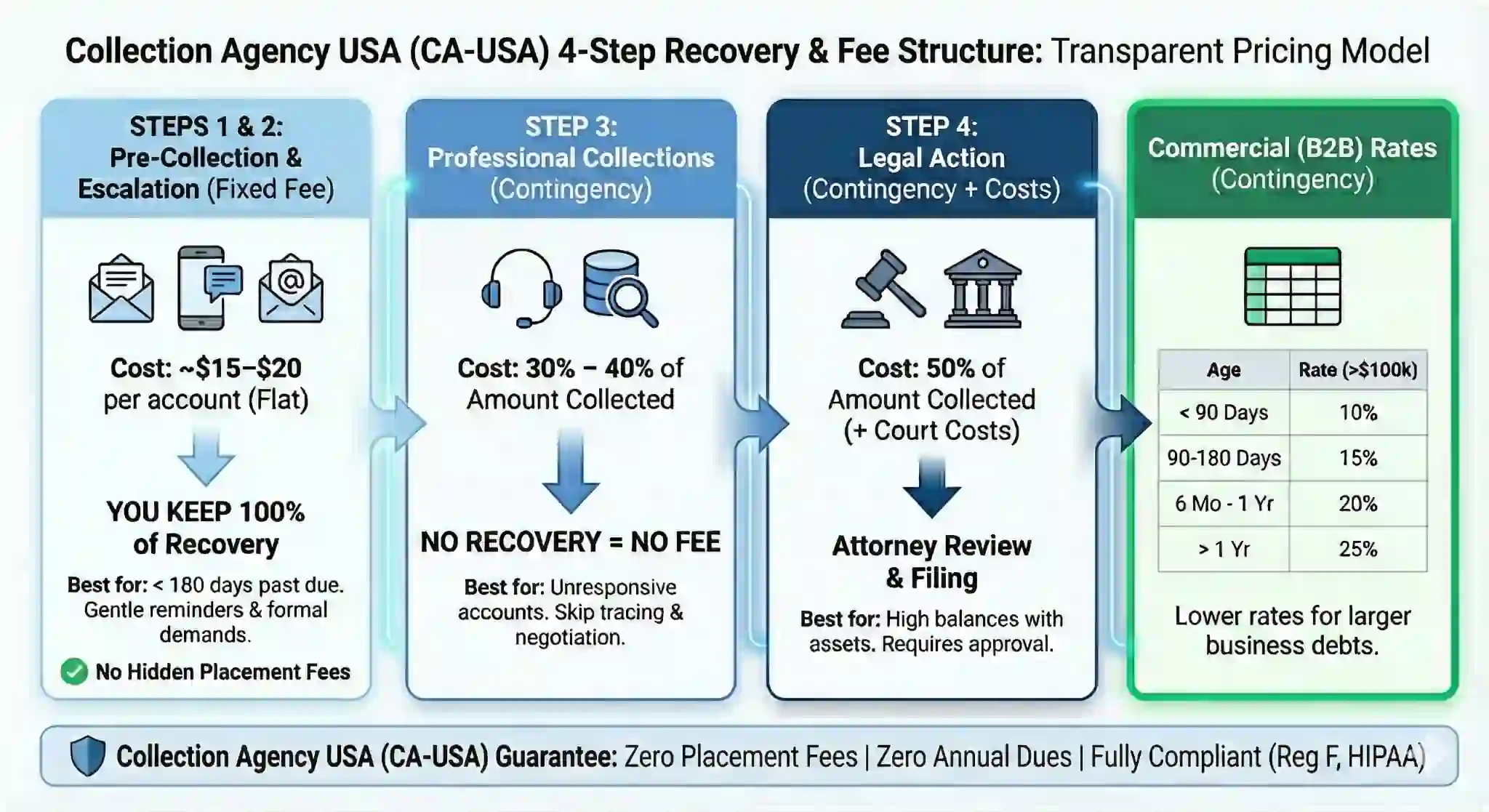
No Recovery, No Fee Guarantee: Contingency-based pricing means you pay nothing unless funds are successfully recovered.
Frequently Asked Questions
How long does a motor carrier have to collect unpaid freight charges?
Under federal law (49 U.S.C. § 14705(a)), motor carriers must initiate legal action to collect unpaid transportation charges within 18 months from the delivery or tender date.
Can a carrier collect from the shipper if the freight broker defaults?
Yes. Unless the Bill of Lading contains an executed “Section 7” non-recourse clause, shippers and consignees remain jointly liable for transportation charges, even if they previously paid the defaulting broker.
What is a BMC-84 broker bond claim?
A BMC-84 bond claim is a formal legal demand filed against a freight broker’s federally mandated $75,000 surety bond to recover unpaid freight invoices when the broker fails to pay motor carriers.
What is the Carmack Amendment deadline for cargo damage claims?
Under 49 U.S.C. § 14706, carriers cannot require cargo loss or damage claims to be filed in less than 9 months from delivery. Lawsuits for denied claims cannot be required in less than 2 years from the date of written denial.